
Better Bladder Control
Retraining the pelvic floor can significantly reduce leaking with laughing, coughing, sneezing and exercise, one of the most common reasons patients seek care.
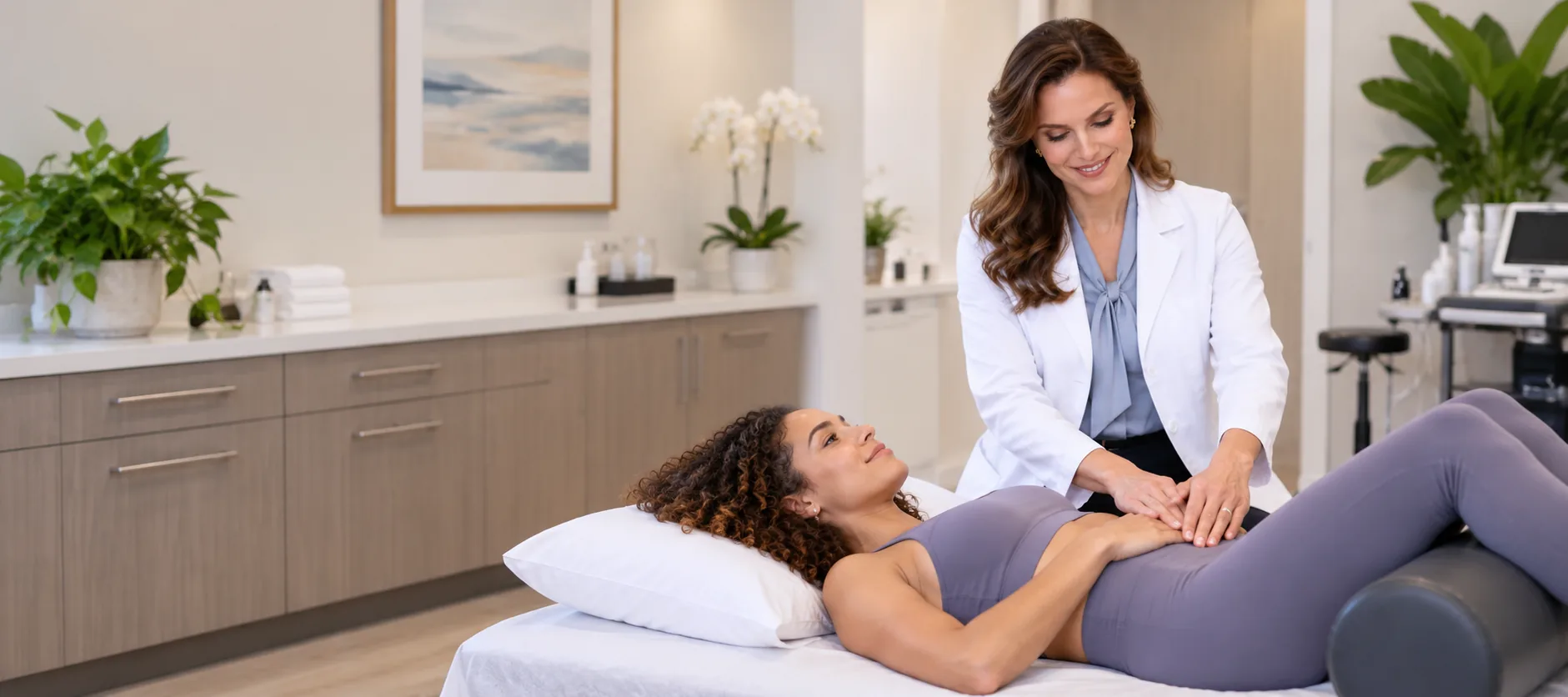
Treatments at Transformity Health
Strength, Control and Confidence, From the Core.
Private, physician-guided pelvic floor care for bladder control, postpartum recovery, pelvic discomfort and intimate wellness.
Women's & Men's Health
The pelvic floor is a group of muscles that supports your bladder, bowel and reproductive organs, and plays a central role in core stability, bladder control and sexual function. Like any muscle group, it can become weak, tight or uncoordinated, and when it does, the effects show up in very personal ways.
Common signs include leaking when you laugh, cough or exercise, urgency and frequent trips to the bathroom, pelvic pressure or discomfort, pain with intimacy, and core weakness after pregnancy. These issues are incredibly common, especially after childbirth and with age, yet most people suffer quietly for years before seeking help.
Pelvic floor treatment retrains and strengthens these muscles through a personalized program. Depending on your evaluation, care may include guided exercises, biofeedback-based training, lifestyle strategies and coordination with hormone or regenerative therapies when appropriate.
At Transformity Health, every conversation happens privately and respectfully. Dr. Liv evaluates the whole picture first, because pelvic floor symptoms often connect to hormones, weight, posture, stress and past pregnancies, and the right plan addresses all of it.
Benefits Include
Small muscles, life-changing results. Here is what pelvic floor care can support.
Retraining the pelvic floor can significantly reduce leaking with laughing, coughing, sneezing and exercise, one of the most common reasons patients seek care.
Pregnancy and childbirth place enormous strain on the pelvic floor. Guided rehabilitation helps restore strength, coordination and confidence after delivery.
A healthy pelvic floor supports sensation, comfort and satisfaction. Many patients find intimacy improves as strength and relaxation return to balance.
The pelvic floor works with your deep core and diaphragm. Strengthening it improves posture, stability and how your whole midsection functions.
For tight or overactive muscles, treatment focuses on release and retraining, easing pressure, tension and pain with sitting or intimacy.
Better muscle control and bladder habits can calm the constant feeling of needing to find a bathroom.
No more planning your day around restrooms or avoiding workouts, travel and social events. That freedom is what patients value most.
Pelvic symptoms connect to hormones, weight, stress and posture. Your evaluation looks at all of it, not just one muscle group.
Hormonal changes affect pelvic tissue and muscle. Treatment can pair with hormone optimization when menopause is part of the picture.
Every visit is confidential and unhurried. These are sensitive topics, and they are handled with the professionalism they deserve.
Clear, personalized exercises and strategies that fit real life, with progress reviewed and adjusted as you improve.


Harvard trained
Nearly two decades in medicine

Root-cause approach
A Note From Dr. Liv
The sentence I hear most often is some version of: I thought this was just part of being a mom, or part of getting older. Leaking, urgency, pelvic pressure and discomfort with intimacy are common, but they are not something you simply have to live with.
The pelvic floor responds to training like any other muscle group, but only when the program matches the actual problem. Weak muscles need strengthening; tight muscles need release first. That distinction is why a proper evaluation matters before any exercise plan.
Your care here is private, respectful and unhurried. We look at the whole picture, including hormones, past pregnancies, posture and stress, and build a plan you can genuinely follow. Most patients wish they had come in years earlier.
Dr. Liv Uslar, MD/PhD
Frequently Asked Questions